

Nairobi to Maasai Mara by Road: The 2026 Route, Cost and Vehicle Guide
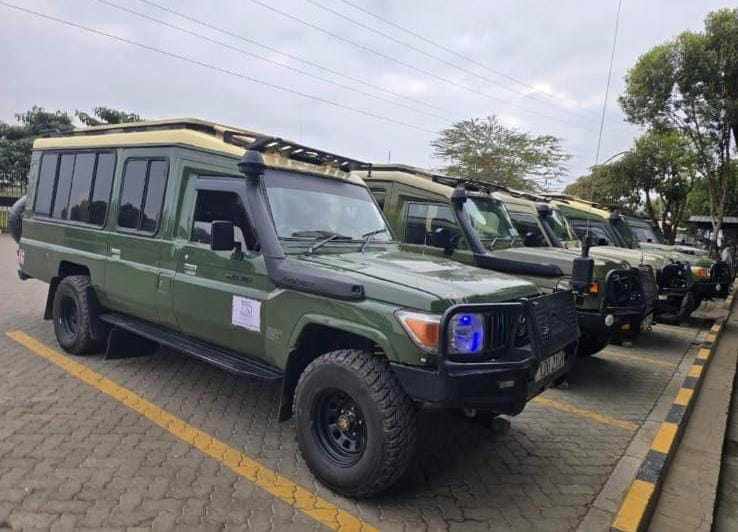
Maasai Mara safari van rentals
Nairobi to Maasai Mara is roughly 270 to 280 km and takes 5 to 6 hours via Narok. The road is now fully tarmacked all the way to Sekenani Gate. From Narok to Sekenani you will hit potholes and patched sections, so the drive is slower than the distance suggests. The remaining approaches to Talek and Oloololo still carry rougher or unpaved sections, and those plus rain are what decide which vehicle you actually need.
We drive this route most weeks. This guide breaks it into the four sections you will actually feel from the passenger seat.
Quick answers
- Distance: 270 km to Sekenani Gate, 285 km to Talek, ~330 km to Oloololo (Mara Triangle).
- Driving time: 5 to 6 hours to Sekenani, 6.5 to 8 hours to Oloololo.
- Best departure time: 6:00 to 6:30 am from Nairobi, to clear Mai Mahiu before traffic and reach the gate before 4 pm.
- Maasai Mara daily park entry (2026):
- International Non-Residents (Adults – 18+ years):
“USD 100 per non resident adult per day from 1st January 2026 to 30th June 2026” — Masai Mara Reserve Entry Fees & Park Rules.“USD 200 per non resident adult per day from 1st July 2026 up to 31st Dec 2026.”
- International Non-Resident Children (Ages 9–17): USD 50 per child per day (January to December).
- Children 8 years and under: Free entry.
- Kenyan Citizens (Adults): KES 1,500 per day (January–June) and KES 3,000 per day (July–December).
- Kenyan Citizen Children (Ages 9–17): KES 300 (January–June) and KES 500 (July–December).
- East African Residents (Adults): KES 2,500 per day (January–June) and KES 5,000 per day (July–December)
- International Non-Residents (Adults – 18+ years):
- Maasai Mara daily vehicle entry fee:
Capacity Rate (KES) Rate (USD) 6–12 seats 1,500 KES $15 USD 13–24 seats 3,500 KES $30 USD 25–44 seats 4,500 KES $38 USD 45+ seats 5,000 KES $40 USD - Ticket validity: 12 hours, expiring 6 pm the same day not 24 hours. A game drive on departure morning needs a new ticket.
- Minimum sensible vehicle: high-clearance 4×4 in the wet season; a 2WD van is workable in the dry season to Sekenani only.
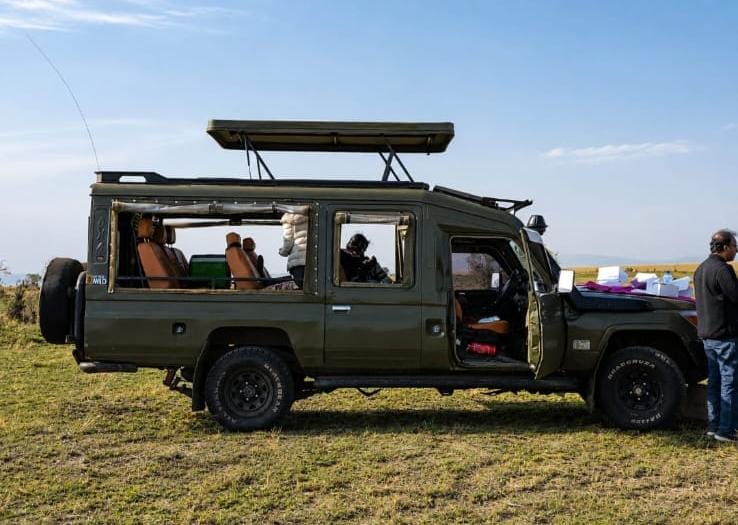
A Toyota Landcruiser safari tour van parked in the plains of Maasai Mara during lunch break
The drive in four sections
1. Nairobi to Mai Mahiu – 55 km, about 1 hour 15 minutes
Out through Karen and Ngong, or via Naivasha Road and the Rift Valley viewpoint. The Escarpment descent is steep, tightly cornered and shared with heavy trucks. Brakes matter more than power here. Leave before 6:30 am and you skip most of the truck queue.
Stop: the Rift Valley viewpoint curio stalls above Mai Mahiu five minutes, and it is the best photo on the route.
2. Mai Mahiu to Narok – 90 km, about 1 hour 30 minutes
Fast, open tarmac across the Suswa plains. Watch for livestock crossings and unmarked speed bumps through Suswa and Duka Moja trading centres.
Narok is your last real town. Fill the tank completely, draw cash, buy water and snacks, and use a proper washroom. Fuel beyond Narok is scarce, more expensive, and not always available.
3. Narok to Sekenani Gate – 90 km, about 1 hour 30 minutes
Tarmac all the way, but no longer smooth. Expect potholes, patched sections and uneven shoulders through wheat farms and Maasai grazing land. Keep your speed down, watch for livestock on the verge, and allow extra time this section often takes longer than the Mai Mahiu to Narok leg even though the surface is paved.
4. The last stretch – 30 minutes to 2.5 hours
This is the section that defines the trip.
- To Sekenani Gate: now tarmacked, but still slow because of potholes and soft verges. A saloon or van is fine in the dry season; high clearance is more comfortable.
- To Talek Gate: longer, rougher, corrugated. High clearance strongly advised.
- To Oloololo / Mara Triangle: the long way round via Lolgorien, or across the reserve. 4×4 only, and after heavy rain it can be impassable.
In April to May and November, black cotton soil on the Talek and Oloololo approaches becomes greasy. Two-wheel-drive vehicles get stuck there, and a recovery out here is expensive and slow.
Which gate should you use?
| Gate | Distance from Nairobi | Best for | Road |
|---|---|---|---|
| Sekenani | ~270 km | Eastern lodges, first-time visitors, budget trips | Tarmac, potholed after Narok |
| Talek | ~285 km | Central Mara camps, Talek River crossings | Rough final 40 km |
| Sekenani/Ololaimutiek | ~275 km | Olare Motorogi & eastern conservancies | Good |
| Oloololo | ~330 km | Mara Triangle, fewer vehicles, best river crossings | 4×4 essential |
Note that the Mara Triangle is run by the Mara Conservancy and the eastern side by Narok County. They bill separately, and a Narok County ticket does not cover the Triangle.
Choosing the Right Safari Vehicle to Maasai Mara
-
Dry season, Sekenani:
-
4–7 people: Toyota HiAce pop‑ up roof 7‑seater van .
-
8–13 people: Toyota HiAce 13‑seater van. Not for serious off‑track safari.
-
-
Any season, Talek or Oloololo: Land Cruiser or similar 4×4—non‑negotiable.
-
Wet season, any gate: 4×4 with good tyres. A 2WD “saving” isn’t worth a recovery fee.
-
Groups of 10+: Two vans beat one bus. Buses can’t handle murram well and can’t game‑drive inside the reserve.
-
Game drives: Use a pop‑top roof. Standard van roofs mean photographing through glass.
-
Before departure, check: spare wheel + working jack, tyre tread, seatbelts on every seat, PSV/insurance papers, and confirm insurance covers unclassified roads.
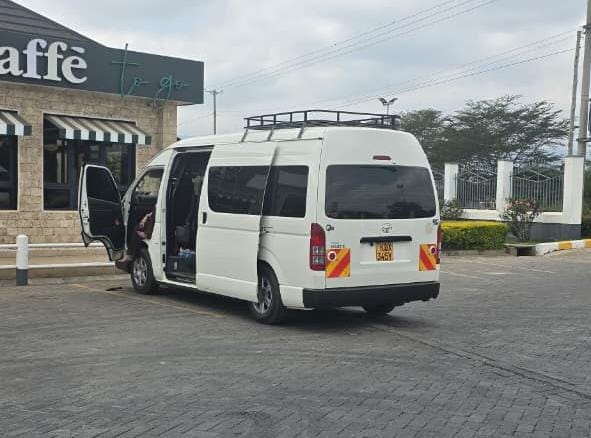
A parked 14 seater van enroute Maasai Mara
Flying vs. Driving to the Masai Mara: How to Choose Your Route
Scheduled flights out of Nairobi’s Wilson Airport deliver you directly to the bush in just 45 to 60 minutes, making air travel the clear winner for sheer speed, comfort, and maximizing your time on safari.
However, overland transit offers distinct functional advantages depending on your group size and budget:
-
Speed & Comfort (Fly): Best for solo travelers or couples looking to bypass a bumpy 5- to 6-hour road journey.
-
Cost & Utility (Drive): For groups of three or more, driving significantly lowers per-person transit costs and provides a dedicated 4×4 vehicle for the entire stay—eliminating total reliance on shared lodge game drives.
-
The Hybrid Option: A popular compromise is flying into the Mara for a smooth arrival and driving back to Nairobi to take in the Great Rift Valley scenery along the way.
Main Airstrips Inside the Maasai Mara Reserve
- Keekorok Airstrip (serves the southern sector)
- Mara Serena Airstrip (serves the western sector and Mara Triangle)
- Ol Kiombo Airstrip (serves the central Mara region)
- Musiara Airstrip (serves the northern/river areas)
- Kichwa Tembo Airstrip (serves the northernmost point)
Practical rules for the drive
- Leave Nairobi by 6:30 am. Arriving at the gate after dark is avoidable and unpleasant.
- Fill up in Narok. Not after.
- Carry cash as network coverage is patchy past Sekenani Junction.
- Download offline maps before Narok.
- Pay park fees through the Narok County/KAPS system, not KWS eCitizen. eCitizen does not cover the Mara and gate rangers cannot accept it.
- Buy your ticket knowing it expires at 6 pm the same day.
- Do not drive inside the reserve after 6 pm or off designated tracks.
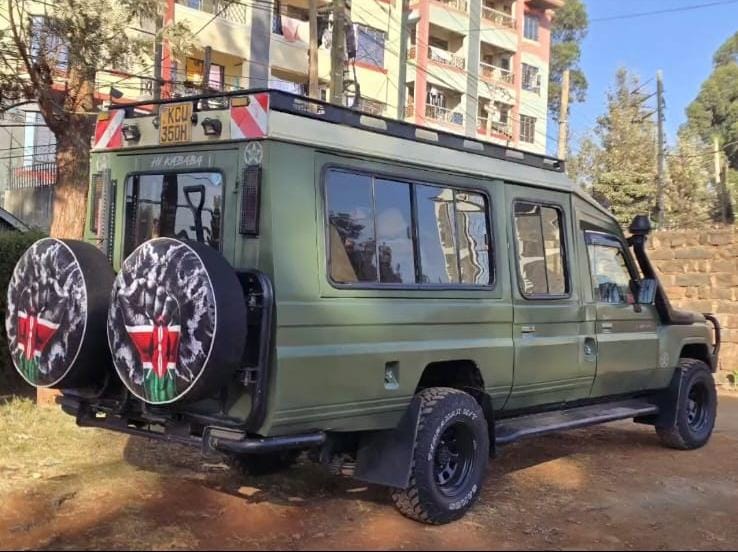
Toyota Landcruiser safari van at Maasai Mara
How much is the cost of hiring a 4×4 Landcruiser safari van?
-
The daily vehicle rate cost with a Driver-Guide ranges from : $250 – $350 per day (KES 30,000 – KES 45,000). Covers the vehicle, unlimited daily mileage within parks, a professional driver-guide, and driver allowances/park entry.
Frequently asked questions
How far is Maasai Mara from Nairobi?
Approximately 270 km to Sekenani Gate and about 330 km to Oloololo Gate on the western side, travelling via Narok.
How long does the drive take?
Five to six hours to Sekenani in normal conditions, and six and a half to eight hours to the Mara Triangle via Oloololo.
Can you drive to Maasai Mara in a normal car?
In the dry season you can reach Sekenani Gate in a saloon car or standard van. Inside the reserve and on the Talek and Oloololo approaches, a high-clearance 4×4 is required, and after rain it is required everywhere.
How much are Maasai Mara park fees in 2026?
Non-resident adults pay USD 100 per day from January to June and USD 200 per day from July to December. Children aged 9 to 17 pay USD 50 and under-9s enter free. Vehicles under six seats pay KES 1,500. Tickets are valid 12 hours and expire at 6 pm.
Is the Nairobi to Sekenani road tarmacked?
Yes. The route is fully tarmacked from Nairobi through Mai Mahiu, Narok and on to Sekenani Gate. The section from Narok to Sekenani has potholes and patched surface, so keep your speed down. The Talek and Oloololo approaches still include unpaved or rough stretches.
What is the best time of year to drive to the Mara?
July to October for the wildebeest migration and firm roads, or January to March for good game viewing at lower cost. April to May and November are the long and short rains, when the final murram stretch is at its worst.
Do I need a driver, or can I self-drive?
Self-drive is legal and popular, but a local driver-guide handles the gate payments, knows which tracks are passable that week, and finds wildlife you would drive past. For a first Mara trip we recommend a driver.
Book a vehicle for this route
Gravity Vans For Hire runs Nairobi to Maasai Mara transfers and full safari vehicle hire, with pop-up roofs 4x4s and 7 to 14 seater vans, experienced Mara drivers, and fuel and driver arrangements agreed up front. Request a quote for your dates and tell us your group size and gate and we will tell you honestly which vehicle you need.
Written by Dennis Gikaru, Director of Operations, Gravity Vans For Hire, Nairobi. We have operated vehicles on the Nairobi to Narok Mara route since 2011. Last updated: 05/08/2026.